How Weather Affects Exterior Real Estate Photography
Sellers see a gray sky on shoot day and want to reschedule. For most shoots, the answer is no: keep the appointment.
The best weather for real estate photos depends on the property, its orientation, the view, and whether the exterior is a major selling feature.
Overcast is not a problem for most of what happens on a shoot. It’s actively better for some of it. The weather that genuinely warrants moving a date is narrower than people think, and knowing which is which saves you from pushing a launch by four days for no reason.
The Best Weather for Real Estate Photos
A flat gray sky is an enormous diffuser. It kills the hard shadows that direct sun throws under eaves, porches, and trees, and it lights a facade evenly instead of splitting it into a bright half and a black half.
Better still, it helps indoors. The gap between window brightness and room brightness is the central technical problem of interior photography, and overcast narrows that gap considerably. Interiors shot under a gray sky are frequently cleaner than the same rooms in blazing sun.
As for the sky itself: a flat white sky in an exterior frame can be replaced in post. That can preserve the soft, even light on the building while improving the sky, subject to the listing’s brokerage and MLS image policies.
Direct sun is a mixed blessing
Bright sun gives you saturated landscaping and a real sky, and it also gives you the highest-contrast conditions of the day.
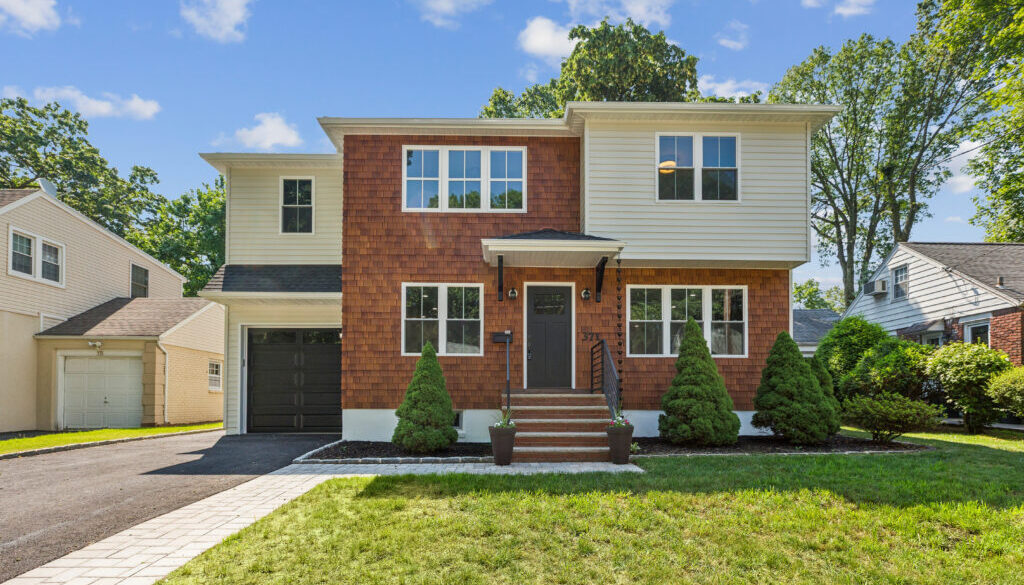
What matters is orientation and timing. An east-facing facade wants morning. West-facing wants late afternoon. Shoot a west-facing house at 9am and the front is in its own shadow all morning. Editing cannot fully recreate favorable front light that was not present at the time of the shoot.
Midday sun is often the most difficult: hard shadows under every overhang, blown highlights on light-colored siding, and stripes of glare across interior floors.
When to actually move the date
Heavy rain. Wet pavement, dark skies, droplets on the lens, and nothing looks inviting. Interiors are usually still fine, so the common fix is to shoot inside on schedule and pick up exteriors on a short return visit.
High wind. Patio furniture goes over, plants thrash, and anything staged outdoors won’t stay staged.
Snow, which depends entirely. Clean fresh snow on an untouched lawn is genuinely beautiful and can make a strong winter listing. Three-day-old snow, gray slush, tire tracks, salt stains, half-melted piles at the curb, is the worst-looking condition there is. Fresh: shoot it. Old: skip the exteriors.
Fog and heavy haze if the view is a selling point. A frame captioned as having skyline views that shows a white wall does more harm than not shooting it.
Twilight, on purpose
Dusk exteriors are a scheduled decision, not a weather one. In the twenty or thirty minutes when the sky goes deep blue and the interior lights read warm, a house with good landscape lighting photographs dramatically.
It’s worth it for luxury listings, townhouses, properties with real exterior lighting, and anything where the hero shot needs to stop a scroll. It’s a separate window, it’s short, and it needs its own slot in the schedule.
The practical rule
Keep the appointment unless it’s actively raining, blowing, or the snow is dirty. Overcast is fine. Overcast is often better. The forecast that should worry you isn’t clouds, it’s a west-facing house booked for a morning slot.
Hudson Heights RES shoots real estate photography, floor plans, and virtual staging across New York City and the nearby metro area, delivery timing is confirmed when you book. Packages and pricing, or reach out to schedule.
Two things worth checking the night before a shoot: sunrise and sunset times for the property’s orientation, and the National Weather Service forecast.
Related reading: picking the lead image, and What to Confirm Before Booking.
Chris Leary is the founder of Hudson Heights RES, which photographs listings across New York City and the nearby metro area.