Should You Turn On Every Light Before Real Estate Photos?
Turn on lamps and fixtures unless your photographer advises otherwise. Then turn off the ceiling fan, because a spinning blade will smear itself across a fifteen-second exposure and it can be difficult to correct cleanly in post.
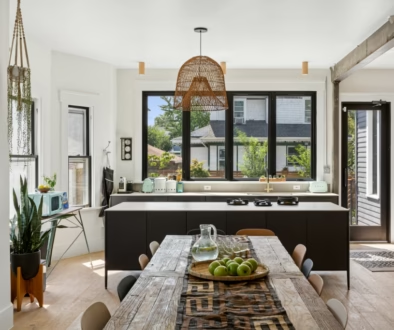
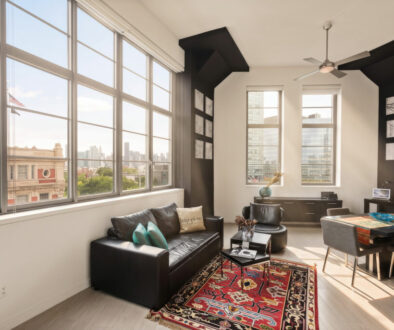
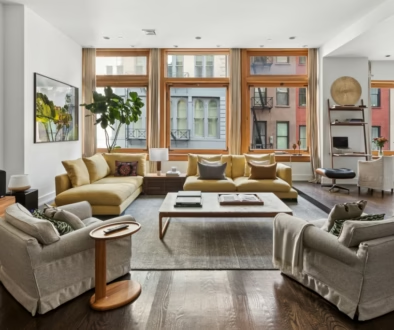
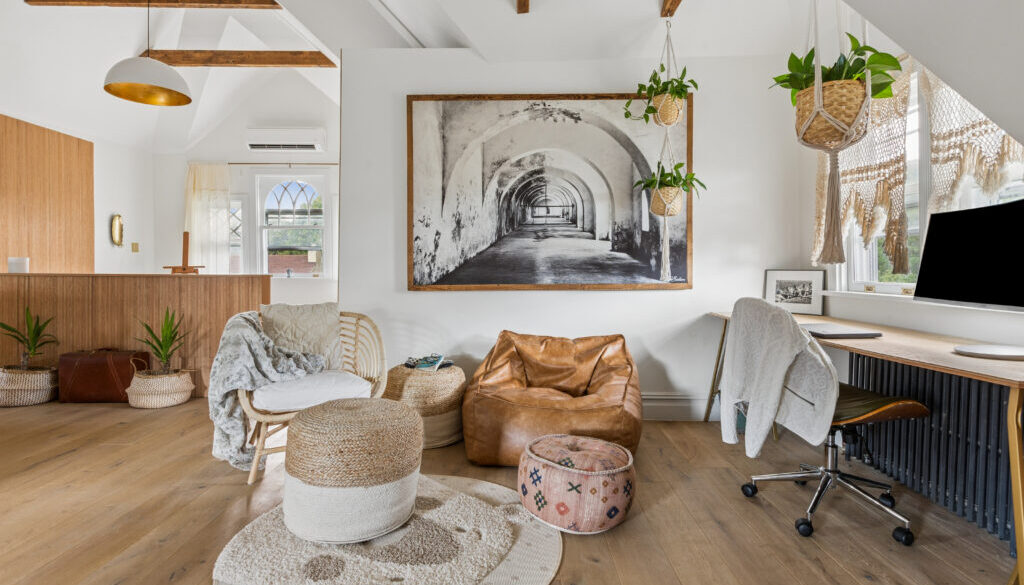
Should lights be on for real estate photos? In most rooms, thoughtful lighting prep helps, but the right approach depends on the space and the photographer’s direction.
That is most of the advice. The rest is about why a room with the lamps on reads as a home and a room without them reads as a vacancy, and about the one lighting problem that quietly ruins more New York apartment photos than anything else.
Should Lights Be On for Real Estate Photos?
A living room lit only by daylight from one window is technically fine and emotionally flat. The far corners go dead, the depth collapses, and the space reads as somewhere that is being vacated rather than somewhere people live.
Switch on the table lamps, the floor lamp, the under-cabinet strip, the pendants over the island, and the room gets warmth and layers. In a railroad apartment or a long hallway, lamps are frequently the only thing keeping the back half of the frame from disappearing.
They also point at the money. Sconces, integrated shelf lighting, and good pendants were expensive, and they don’t exist in a photo unless they’re on.
The mismatched bulb problem
Here is the one that actually costs you.
Bulbs come in different color temperatures, and most apartments have accumulated a mix over the years without anyone noticing:
- 2700K to 3000K, warm white. Yellow and cozy. Old incandescent, most table lamps.
- 3500K to 4000K, neutral. Clean and fairly true.
- 5000K and up, daylight. Distinctly blue-white. Very common in recessed cans and cheap replacements.
Your eye corrects for this automatically. The camera does not. When a living room has warm yellow lamps and cool blue ceiling cans, the photo comes back with one half of the room amber and the other half faintly clinical, and it looks like something is wrong without the viewer being able to say what.
The fix is unglamorous and cheap: match the bulbs within each room. Two matching bulbs from the hardware store beat an hour of editing every time.
This is also a great example of the kind of thing a seller will absolutely do if someone tells them, and will never do if nobody mentions it. The agents who send a short prep note a week ahead get rooms that match. The agents who don’t want to bother the seller get a kitchen with three color temperatures in it, and the room can require additional color correction.
What to turn off
Ceiling fans. Always, even if the light is part of the fixture. Motion blur across the ceiling, distracting.
Televisions and monitors. A black screen photographs clean. A screen showing a paused streaming menu photographs like a screen showing a paused streaming menu.
Cheap LED tape with visible dots. On a glossy quartz counter it throws a row of hot spots that read as glare rather than lighting. Sometimes better dark.
Aggressive spotlights aimed at the lens. Occasionally a directional can sits exactly where I need to stand. That one gets switched off.
Let the windows do the heavy lifting
In a bright New York apartment, daylight is still the main event, and lamps are the supporting cast. Open the blinds evenly, all the way, on every window in the room. Half-open slats photograph as neglect.
If the apartment has a view worth having, that view is a selling feature and it needs the treatment fully open. If the window faces a brick wall four feet away, I’ll tell you and we’ll handle it differently.
The short version for your seller
- Every lamp and fixture on
- Matching bulbs within each room, replaced ahead of time if they’re dead
- Ceiling fans off
- Screens off
- Blinds fully open, evenly
Five lines, and it takes ten minutes the night before. It’s the highest return on effort in the entire prep process.
More on prep in the room-by-room checklist.
Hudson Heights RES shoots real estate photography, floor plans, and virtual staging across New York City and the nearby metro area, delivery timing is confirmed when you book. See packages and pricing or contact us to schedule.
For exterior timing, sunrise and sunset times and the National Weather Service forecast are the two things worth checking the night before.
Related reading: the room-by-room checklist, What Sellers Should Remove, and exterior timing and weather.
Chris Leary is the founder of Hudson Heights RES, which photographs listings across New York City and the nearby metro area.