Wide Shots vs. Detail Photos in Real Estate Photography
A listing gallery needs two kinds of photographs doing two different jobs, and most galleries get the ratio wrong in the same direction.
Wide shots vs detail photos in real estate photography is a useful way to think about what each image needs to do for a listing.
Wide shots explain the property. Detail shots explain the quality. You need far more of the first than the second, and the second is where people waste frames.
Wide Shots vs. Detail Photos in Real Estate Photography
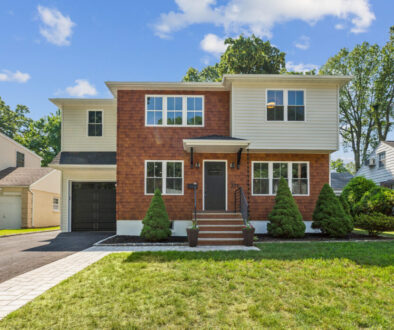
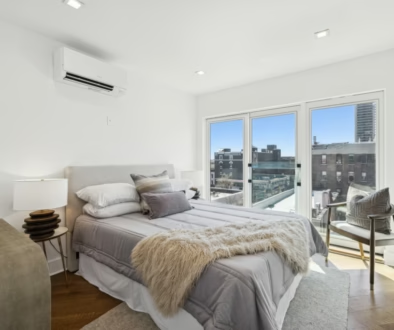
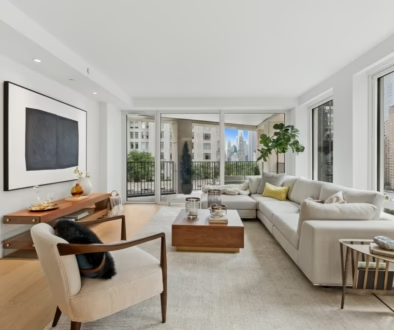
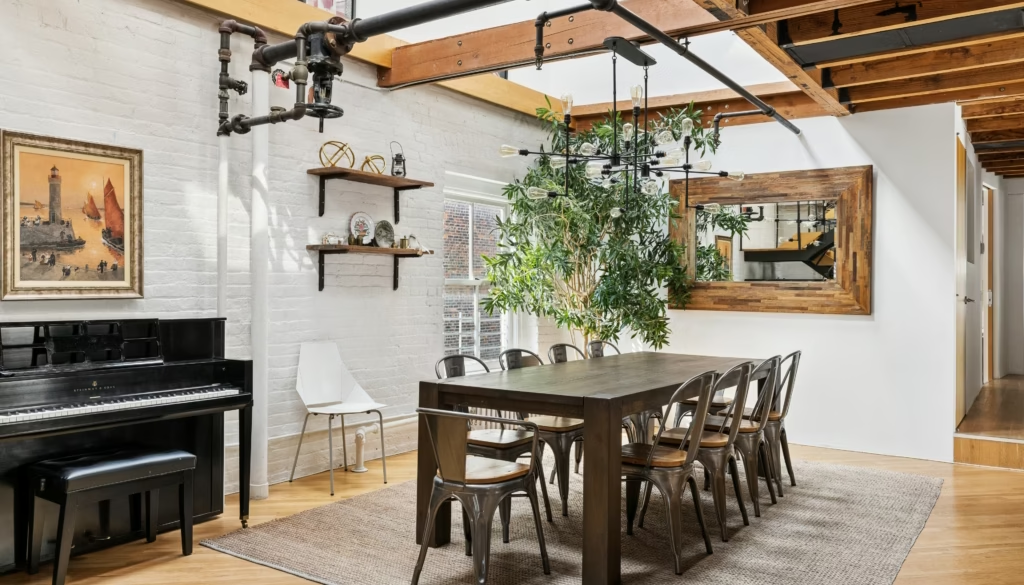
Overview frames answer the questions a buyer actually has. How big is this room. Where do the windows face. Does the kitchen open to the living area or is there a wall. Can a real sofa fit against that wall.
Most galleries should lean heavily toward wide and medium frames. A buyer deciding whether to spend a Saturday morning on your open house is usually thinking about space and layout first.
Detail shots earn their place, sometimes
A tight frame is worth it when there’s craftsmanship a wide shot can’t resolve. In a wide living room shot, a restored 1910 mantel is four inches tall and reads as a gray smudge. Up close, it’s a reason to see the apartment.
Things that legitimately earn a detail frame:
- Original millwork, plaster detail, restored mantels, pocket doors
- A serious range, custom hood, or a waterfall edge on real stone
- Bathroom tile or hardware where actual money was spent
- Built-ins, window seats, custom closet systems
- Hardware and finishes on a gut renovation, where the whole pitch is quality
Notice what these share: they’re all permanent, and they’re all things a buyer would be paying for.
The mistake, which is extremely common
Detail shots of staging. The bowl of green apples on the island. Three folded towels. A candle beside a stack of design books. A vase of flowers on the entry table.
None of it conveys. All of it is leaving with the seller. And it consumes a gallery slot that could have shown a room the buyer hasn’t seen yet.
The test is simple: will this object still be here after closing? If no, don’t photograph it by itself.
Vacant properties flip the math
An empty apartment has nothing to shoot close. No styling, no furniture, no warmth. Just rooms. Detail frames on the fixed elements matter more here: the floors, the window hardware, the moldings, the kitchen finishes. They’re the only texture available.
If the empty rooms are also hard to read for scale, virtual staging on the main living space is usually the higher-value fix.
The wide shot’s blind spot
Wide frames explain rooms but not the relationship between rooms across a floor. Photos alone rarely explain a three-bedroom layout as clearly as a floor plan.
That’s a floor plan’s job, and it’s why a good listing pairs a strong photo set with one. Photos for character and condition, floor plan for the map.
Short version
Mostly wide, a few tight, and only on things that stay with the property. If the detail shot is of something the seller is packing, it’s not a detail shot. It’s a decoration.
Hudson Heights RES shoots real estate photography, floor plans, and virtual staging across New York City and the nearby metro area, with delivery timing confirmed when you book. Packages and pricing, or get in touch about a shoot.
Redfin’s how-to-sell guide covers the seller-side view of the same problem, if you want something to forward.
Related reading: how many photos belong in a gallery, what makes an individual frame hold up, and What Sellers Should Remove.
Chris Leary is the founder of Hudson Heights RES, which photographs listings across New York City and the nearby metro area.