What Makes a Good Real Estate Listing Photo?
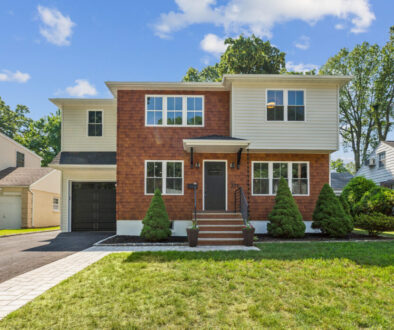
A buyer gives your lead photo only a brief glance before deciding whether to keep scrolling. That is the entire budget. Everything a good listing photo does, it has to do inside that second and a half.
This guide explains what makes real estate listing photos clear, accurate, and useful to a buyer deciding whether to keep looking.
Which means the goal isn’t a beautiful picture. It’s a legible one. Here’s what separates a photo that works from one that just looks fine.
Real Estate Listing Photos: What Buyers Notice
Point a camera slightly up or down in a room and the walls start leaning. Door frames tilt inward, windows go trapezoidal, and the whole space feels like it’s sliding off the edge of the frame.
Nobody looks at a photo and thinks “the verticals are off.” They just feel that something is cheap about it. Getting the camera level and correcting the remaining convergence in post is the least glamorous part of the job and the fastest way to tell a professional frame from a phone snapshot.
Windows that aren’t white rectangles
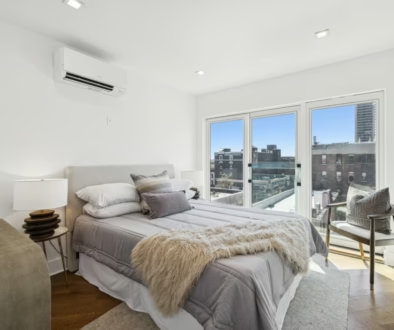
This is the technical problem that defines interior photography. Your eye handles a bright window and a dim room simultaneously without effort. A single exposure often cannot retain detail in both a bright window and a dim room. Expose for the room and the window blows out to solid white. Expose for the window and the room goes murky.
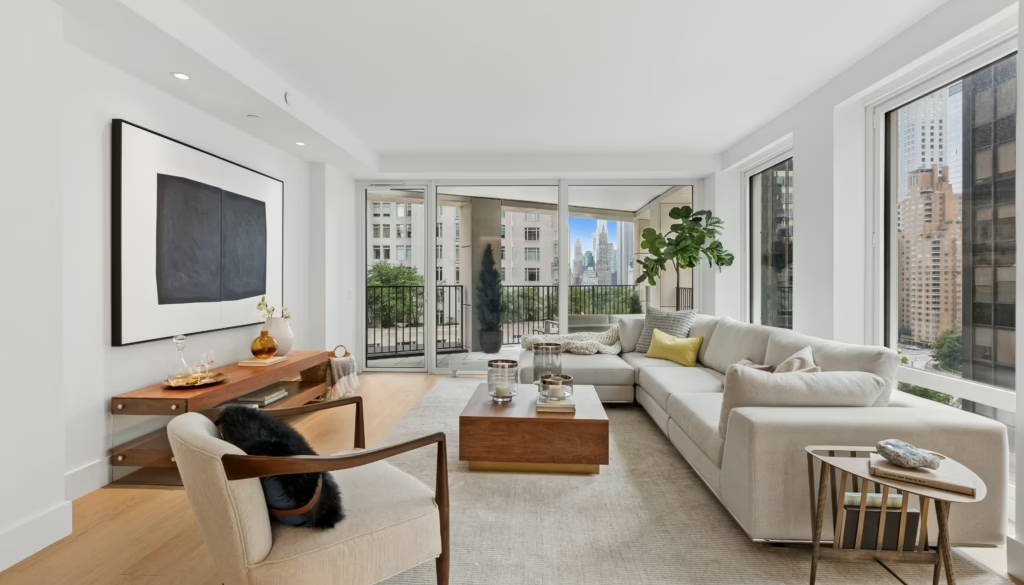
In a New York apartment where the view may be a major part of the property’s appeal, a blown-out window throws away the thing the seller is charging for. Handling that gap, through bracketed exposures, flash and ambient blending, or both, is a major part of what professional interior photography is designed to handle.
A lens that tells the truth about size
There’s a wide, and then there’s a lie. Push the focal length far enough and a 400-square-foot one-bedroom photographs like a loft, with the furniture stretched and bowed at the frame edges.
It generates showings. It also generates buyers who walk in, look around, and feel like they’ve been had. That reaction attaches to the listing and to the agent, not to the photographer. A sane wide angle shows the whole room and still matches what someone finds when they open the door.
Composition that explains the layout
A good frame is chosen from somewhere that shows how the space works. In an open-plan apartment, that’s usually a corner where the kitchen and living area read at once. In a railroad layout, it’s the angle that shows the rooms in sequence rather than one at a time.
What you’re avoiding is the frame that’s technically fine and informationally empty, the one with four feet of floorboard across the bottom and a ceiling fixture at the top, showing a buyer nothing they needed.
A room with nothing competing in it
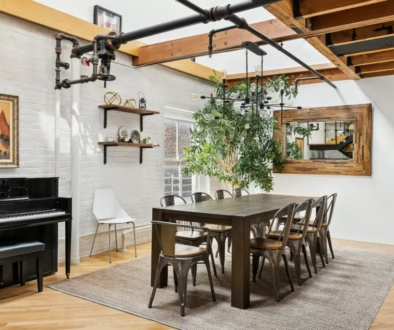
The camera flattens everything to one plane and gives a dish rack the same visual weight as a marble counter. Objects your eye skips over in person become the loudest thing in the photo.
This is why the prep matters more than the gear. A cleared counter photographs as space. A counter with six things on it photographs as six things.
The room-by-room version is here, written to forward to a seller as-is.
And it has to work as part of a set
No single photo carries a listing. The gallery moves from exterior or hero shot, through the main living space, kitchen, bedrooms, bathrooms, and out to whatever outdoor space exists. Each frame answers the question the previous one raised.
Where photos are weakest is layout: how far the second bedroom is from the bath, whether the kitchen opens or closes off. That’s what a floor plan is for, and it’s why the two get sold together.
The test
Look at the frame and ask what a buyer learns from it. If the answer is “the room exists,” it’s a wasted slot. If the answer is “how big it is, where the light comes from, and how it connects to the rest of the place,” it’s doing its job.
Hudson Heights RES shoots real estate photography, floor plans, and virtual staging across New York City and the nearby metro area, delivery timing is confirmed when you book. Packages and pricing, or get in touch.
Google’s image SEO documentation is worth reading if you handle your own listing uploads, since filenames and alt text affect how images surface.
Related reading: choosing the lead photo, when a detail shot earns its slot, and deciding how many frames to shoot.
Chris Leary is the founder of Hudson Heights RES, which photographs listings across New York City and the nearby metro area.